Box Cricket Business Expenses: What Owners Should Track
From floodlight electricity to turf repairs, here is what box cricket owners should track, how to group costs and a simple routine to stay on top of them.

By CrickBox Team
Published 5 min read
A busy box cricket ground can feel profitable: slots are full, teams keep coming back and money arrives every day. But revenue is only half of the picture. Without a clear view of what the venue costs to run, it is hard to know whether you are really making money, which slots are worth discounting, or whether you can afford the next repair.
This guide walks through the expenses box cricket and turf owners should track, how to group them, and a simple routine that keeps your numbers up to date without taking over your week.
Why expense tracking matters
Tracking expenses is not just bookkeeping. It answers the questions that decide how you run your venue:
- Are you actually profitable? Profit is what is left after every cost, not the total of your bookings.
- Are your prices right? When you know what an hour of play costs you, you can set prices and offers with confidence instead of guessing.
- Can you plan for big costs? Turf replacement, new nets and floodlight repairs are easier to handle when you have seen them coming.
- Where is money leaking? Small, regular costs are easy to miss until you add them up.
One-time and recurring costs
It helps to split expenses into two groups, because they behave very differently.
- One-time (set-up) costs are what you spend to build or upgrade the venue: preparing the ground, laying the turf, netting and poles, floodlights, fencing and the first set of equipment. They are large, but they do not repeat every month.
- Recurring (running) costs are what it takes to keep the venue open: rent, electricity, salaries, cleaning and maintenance. They are smaller each time, but they never stop.
Keep the two groups separate in your records. Mixing them makes an ordinary month look terrible, or a month with a big purchase look normal.
Recurring expenses to track
Every venue is different, but most box cricket and turf businesses share the same main running costs.
Rent or lease
If you rent the land or the building, this is usually your largest fixed cost. Note the due date and any agreed increases, so a change in rent never comes as a surprise.
Electricity
Floodlights make evening and night slots possible, and those are often the most popular slots. They also use a lot of power. Track your electricity bills month by month, and compare them with how many evening slots you sold.
Staff
Salaries and wages for ground staff, a manager, security or cleaning help. Include overtime and any one-off payments, so the total reflects what staff really cost.
Turf maintenance and repairs
Artificial turf needs regular care: brushing, infill top-ups, seam repairs and, eventually, replacement. Record small repairs as they happen. Over a year, they show you how fast the surface is wearing.
Equipment
Balls, bats, stumps, nets and anything else that wears out or goes missing. These are small purchases, which is exactly why they are easy to forget. A quick count of your equipment at the start of each month shows what needs replacing before a team asks for it.
Cleaning, water and washrooms
Cleaning supplies, water, washroom upkeep and waste collection. Customers notice when these are neglected, so they are worth budgeting for properly.
Marketing
Printed banners, social media promotion, discounts and any listing fees. Tracking marketing spending lets you compare it with the bookings it brings in.
Software and subscriptions
Booking software, payment services, phone and internet plans, and any other tools you pay for regularly.
Note
This article is general guidance, not tax or legal advice. For GST, income tax and other compliance questions, speak to a chartered accountant (CA) who knows your situation.
A simple tracking routine
You do not need complicated spreadsheets. A short, regular routine is more useful than a perfect system you never open.
Every week
- Record every bill and cash expense from the week, with the date, the amount and the category.
- Keep receipts and invoices together, as photos or in a folder.
- Check pending payments from customers, so revenue you are owed does not get forgotten.
Every month
- Add up each expense category and compare it with the previous month.
- Compare total expenses with total revenue for the month.
- Look ahead: note any repair, renewal or rent change coming up in the next few months.
Every year
- Look back over the whole year: which months were busiest, and which costs grew the fastest.
- Plan the large items, such as resurfacing the turf, new nets or floodlight repairs. Setting a small amount aside each month is far easier than finding the full amount at once.
- Note the renewal dates of your rent agreement, any insurance and your subscriptions for the year ahead.
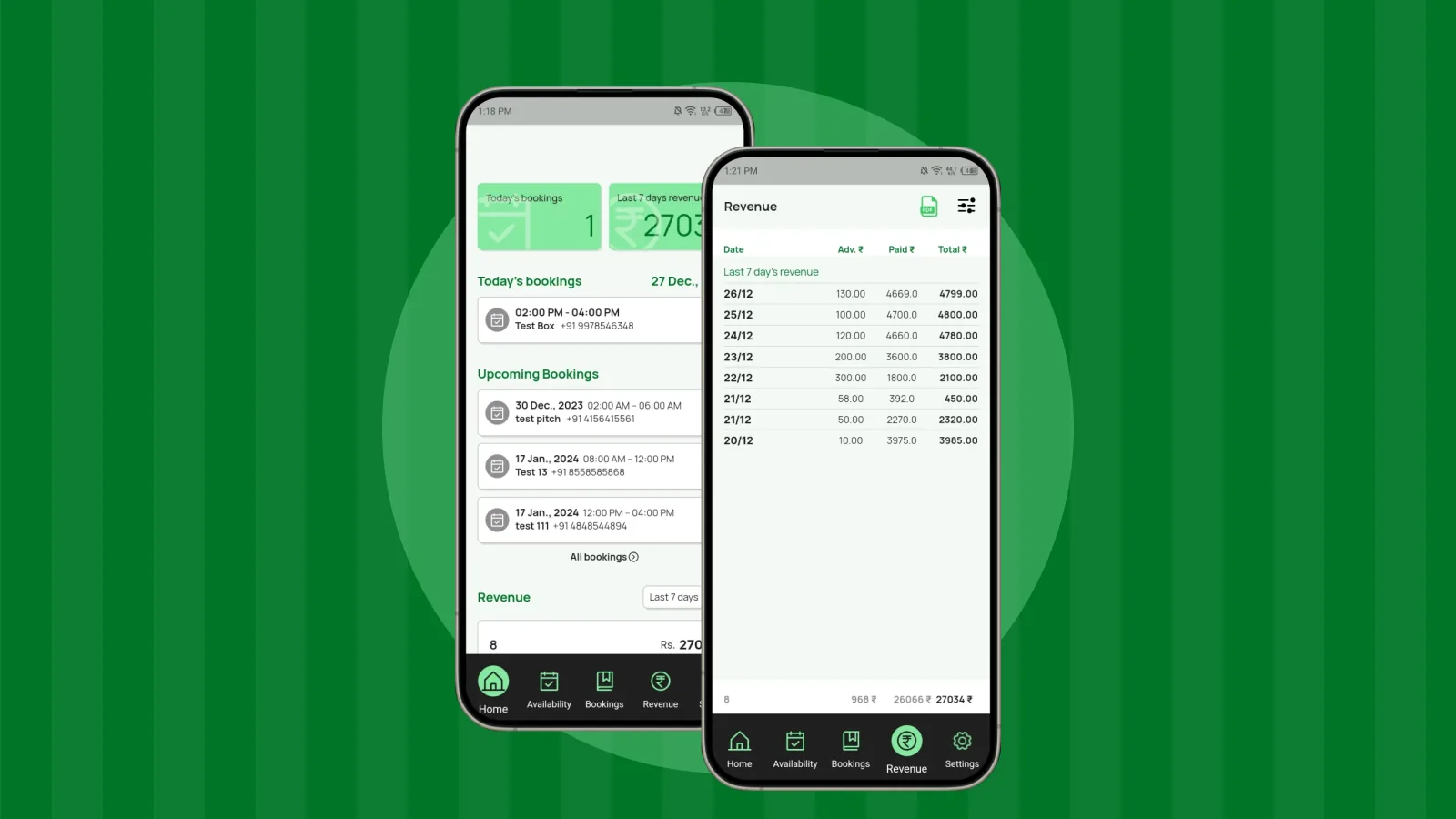
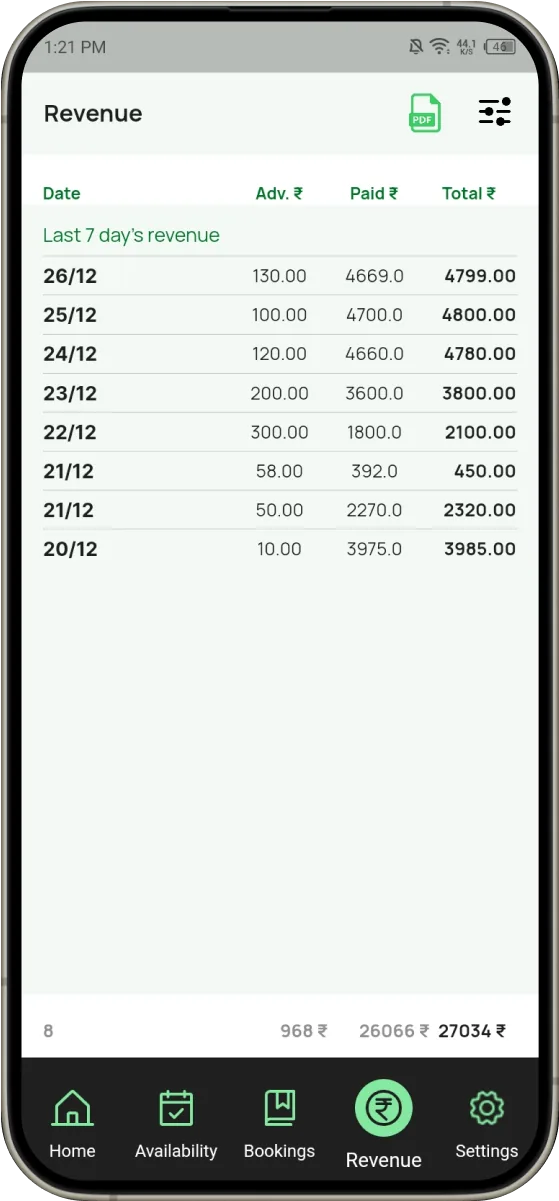
Seeing revenue and payments day by day makes the monthly review much faster, because the numbers are already there.
Common mistakes to avoid
Warning
Mixing personal and business spending is the fastest way to lose track of your venue's real numbers. Keep a separate account for the business, or at the very least separate records.
Other mistakes owners often make:
- Not recording small cash expenses. Individually they look minor; together they can be significant.
- Forgetting irregular costs. An annual renewal or a once-a-year repair can wipe out a month's profit if it was never planned for.
- Looking only at revenue. Full slots do not guarantee a profit if costs are rising faster.
- Not keeping receipts. Without them, it is hard to check a figure later, or to answer your CA's questions.
Your expense-tracking checklist
Use this list to set up your routine. Tick each item off as you put it in place.
How CrickBox helps
CrickBox brings your bookings and your numbers into one app:
- Revenue and expense tracking: review your business income and expenses in one place.
- Payment records: track paid, advance and pending amounts for every booking.
- Reports: review and export the available booking and financial reports when you need them, for example for your monthly review.
Tracking expenses is a habit, not a one-off project. Start with the categories above, keep the weekly routine short, and within a few months you will know exactly what your venue costs to run, and how to make it more profitable.
About the author
CrickBox Team
Product team
The team behind CrickBox, the booking and management app for turf and sports facility owners. We write practical guides for owners who run box cricket and other slot-based venues.
Manage Your Turf Bookings with CrickBox
Check slot availability, manage bookings and track payments from one app.