How to Set Up a Box Cricket Ground: A Step-by-Step Overview
Planning a box cricket ground? Here is an overview of the main setup steps, from choosing a site to opening for bookings, with a video walkthrough.

By CrickBox Team
Published 2 min read
Box cricket grounds are compact, netted and lit for evening play, which makes them a popular choice for turf owners who want regular bookings from teams, offices and groups of friends. Before the first ball is bowled, though, there is a lot to plan.
This overview walks through the main steps in order. The video below covers the physical setup in more detail.
Choose the site
Start with the location. A ground near offices, colleges or housing areas is easier for teams to reach after work or on weekends. Check that the plot has road access, space for parking and a reliable electricity connection for floodlights, and confirm with the local authority which approvals you need before you build.
Plan the ground and the structure
Measure the plot carefully and decide how many grounds or pitches it can hold. The size of the playing area decides how much turf, netting and structure you need, so get this right before you order anything. Plan the layout around the people using it too: an entrance, a waiting area, washrooms and a small counter.
Prepare the base and lay the turf
Artificial turf is only as good as the base underneath it. The ground needs to be levelled and prepared so that it drains properly; water standing on the surface damages turf and cancels bookings. Work with an experienced installer, and ask how the base is prepared, how the seams are joined and what maintenance the turf needs.
Install nets, poles and floodlights
The netted box is what makes box cricket possible in a small space. Poles must be strong and properly anchored, and the netting must cover the sides and the top so that balls stay inside. Floodlights extend your playing hours into the evening, which is often when demand is highest, so plan for even lighting across the whole ground.
Tip
Before you open, play a few practice matches yourself. Gaps in the netting, dark corners and uneven patches are much easier to spot with a ball in play.
Get ready for bookings
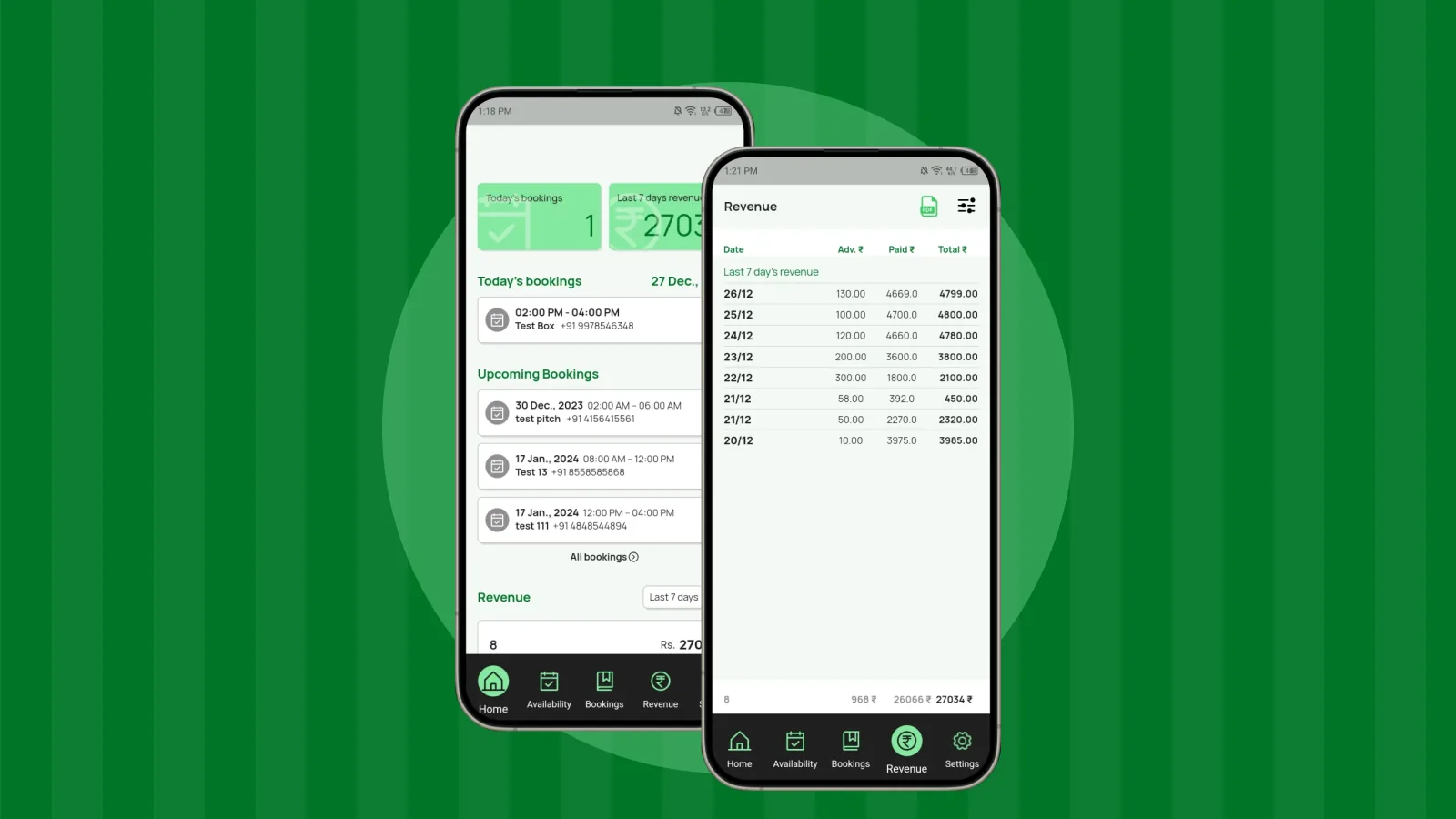
Once the ground is built, the work shifts to running it. Decide your slot times and buffers, how you will take advance payments, and who on your team can take bookings. Set this up before your first customer calls, so every booking goes into one place from day one.
How CrickBox helps
When your ground is ready to open, CrickBox helps you run it:
- Multiple grounds and pitches: manage your supported grounds and pitch configurations from one account.
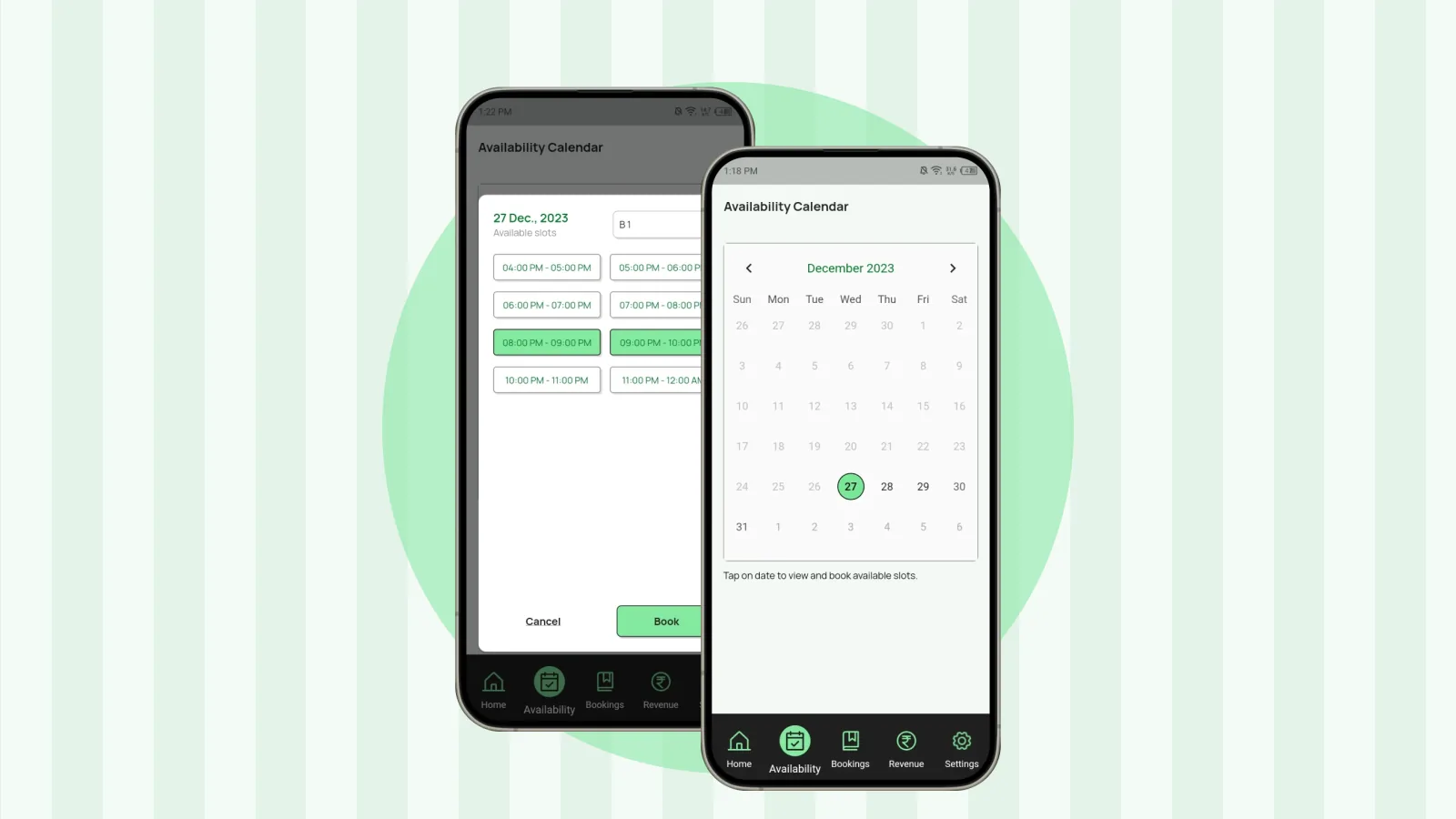
- Live slot availability: check which slots are free before you confirm a booking.
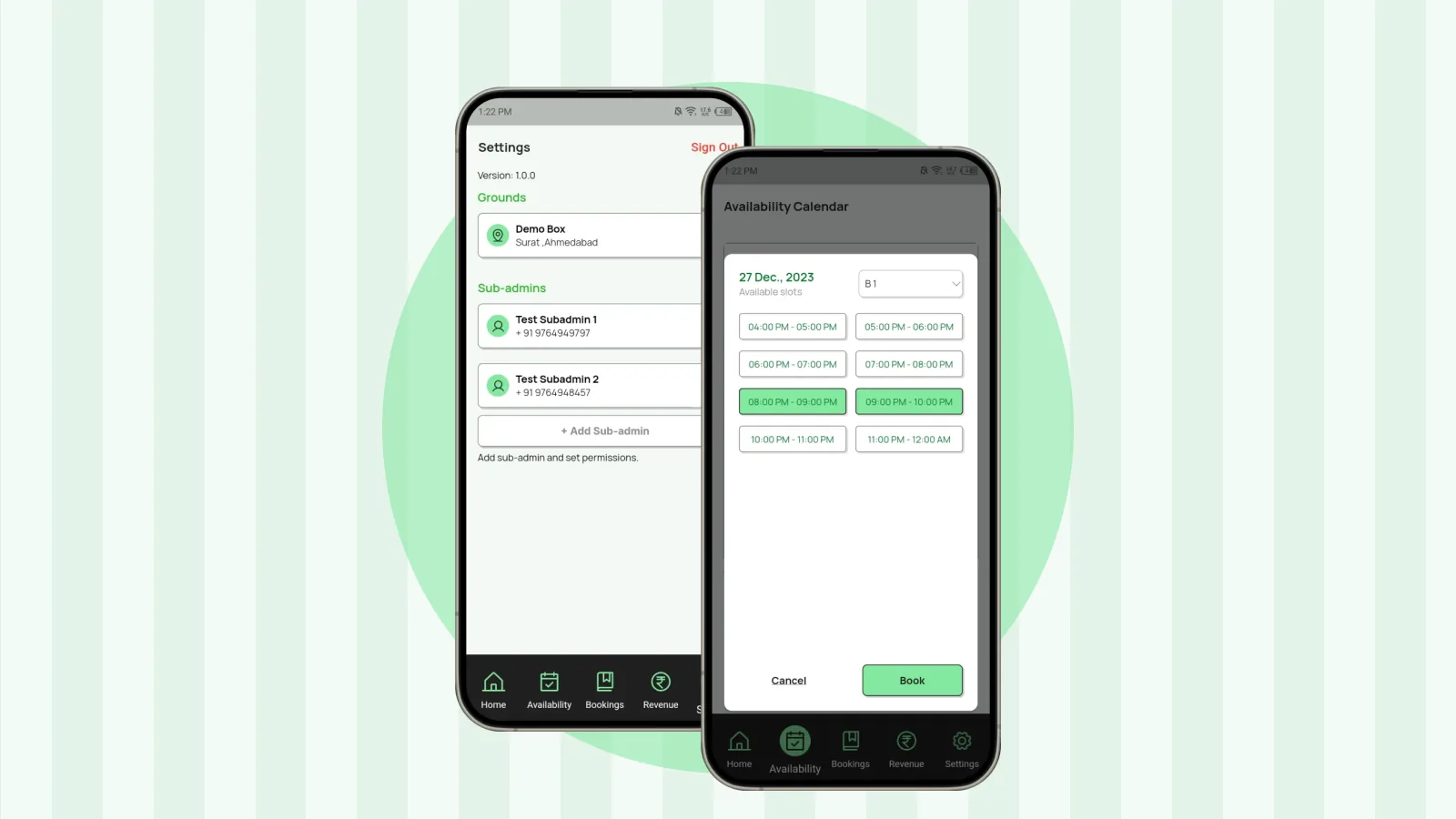
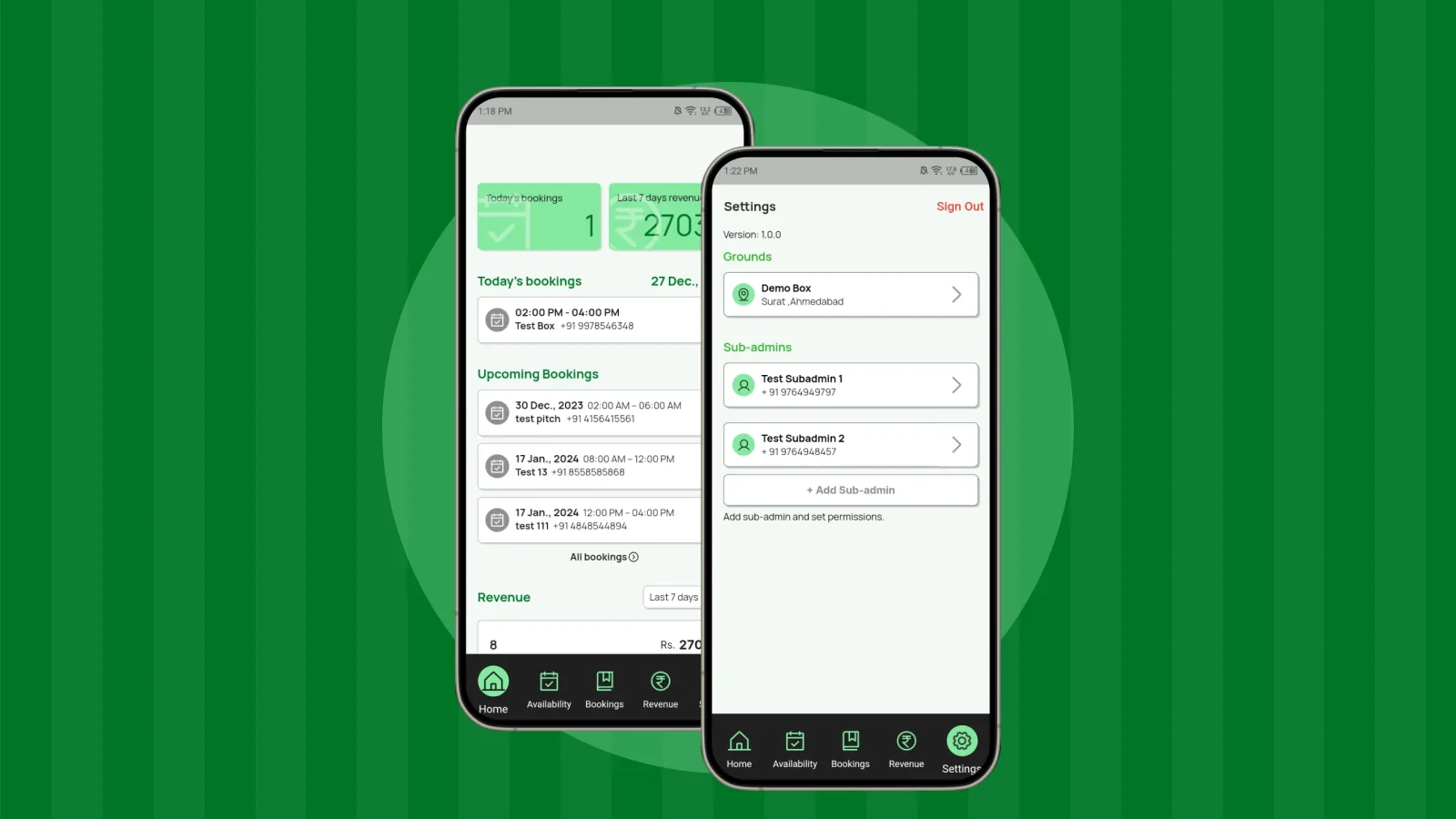
- Staff and sub-admin access: give your team access with the permissions you choose.
For the day-to-day side, read how to manage turf bookings without double bookings.
About the author
CrickBox Team
Product team
The team behind CrickBox, the booking and management app for turf and sports facility owners. We write practical guides for owners who run box cricket and other slot-based venues.
Manage Your Turf Bookings with CrickBox
Check slot availability, manage bookings and track payments from one app.